


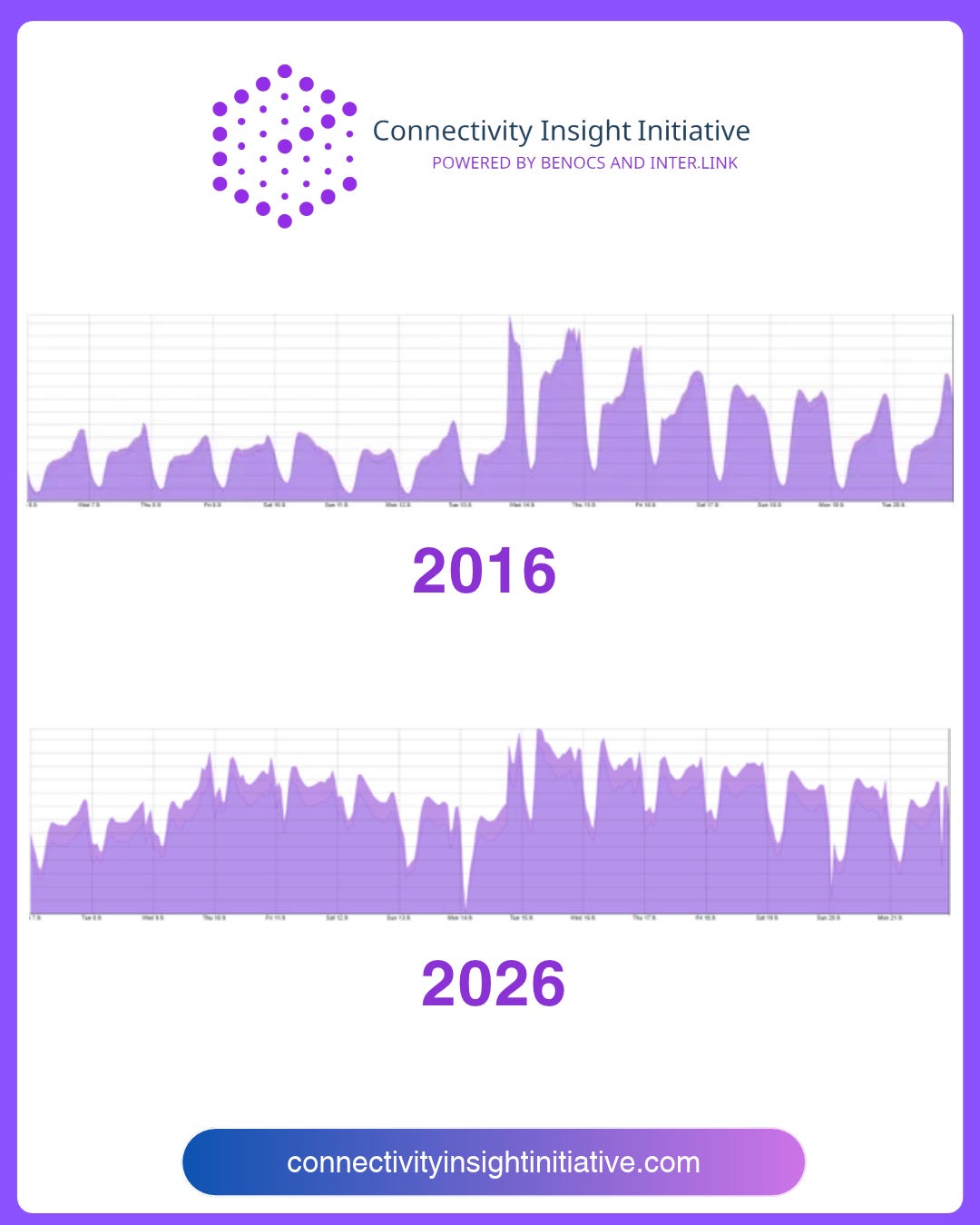
After the iOS update last week, we decided to look into the historical data to see how such updates affect the network.
Our main conclusion after having looked at 10 years of historical traffic flows: Apple has largely managed to flatten out the traffic by pre-loading iOS updates in the background.
iOS regularly checks for updates in the background and, when your device has settings enabled for it, downloads the update package before you're prompted to install it. The update sits on your device, downloaded but not installed, until you tap "Install Now" (or it installs automatically overnight if you've enabled automatic updates).
This saves bandwidth spikes on release day, but also makes the actual update process faster for the user, since only installation (not downloading) has to happen at that point.
Further, not every device gets the "update available" notification at the same instant. Apple’s spreading out of notifications for system updates also seems to have had an effect on the network traffic. This is not only beneficial for the network, but it also lets Apple catch major issues before pushing to everyone.